
Review of Anthem, by Ayn Rand.
http://www.youtube.com/watch?v=tnXTjVJtoNQ
From C.S. Lewis to Frankenstein to Nathaniel Hawthorne’s Scarlet Letter, truth in religion and
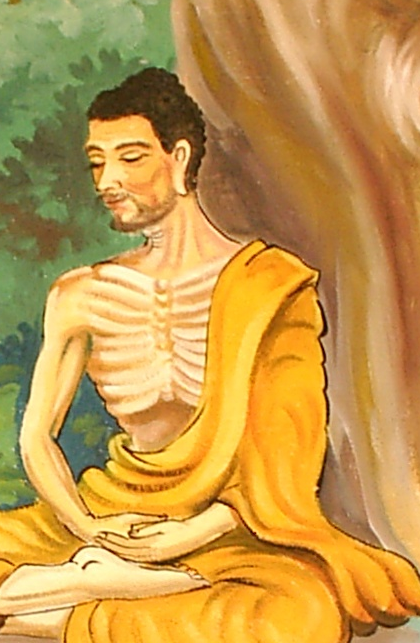
spirituality has been a deep philosophical question in works as old as Dante’s Divine Comedy. Hermann Hesse’s cornerstone novel, Siddhartha, features a young Indian prince classically trained as a Brahman (a high Hindu priest). It follows his journey from asceticism to Enlightenment, his physical travels reflecting a spiritual exploration many young people undertake in their lives.
Siddhartha’s story is loosely based on the story of Siddhartha Gautama, the founder of the Buddhist religion. An Indian prince, raised as a Hindu, Siddhartha renounces his riches and becomes an ascetic. After finding no peace in the Samanas’ teachings, he goes under the tutelage of a wise man named Gotama, who was believed to be a Buddha (one who has achieved enlightenment). Yet unsatisfied, Siddhartha goes off on his own, searching for his own answers instead of following a predetermined path. However, the absence of companionship leaves him prey to worldly temptations. Siddhartha takes up with a beautiful escort, Kamala, and acquires many possessions, including a house, fine clothes, toys and servants. Living a life of luxury, he abandons his quest for Enlightenment. Siddhartha has a revelation about his lifestyle and deserts his materialistic life to live with a ferryman by the river. He finds out that Kamala birthed a son with him, and after her death, takes the boy under his arm. However, the young man is much like Siddhartha in his youth – stubborn and unwilling to learn from those much older and wiser than he is. As his life comes full circle, Siddhartha realizes that only knowledge can be passed on – wisdom comes with age. Achieving Enlightenment, Siddhartha can live out the rest of his life in peace.
Hermann Hesse and many other novelists throughout history have undertaken coming-of-age novels, in which the protagonist, through trials and tribulations, finds himself and the meaning of his life. Examine Catcher in the Rye. Feeling emotionally disconnected from other youths his age, young Holden Caulfield runs away to find out the path his life is meant to take. This story is considered a seminal novel in the development of the coming-of-age genre.
However, Siddhartha explores another side of the teenage angst novel. Siddhartha is not just lonely in the sense of physical loneliness. No, our protagonist suffers from spiritual solitude – he has questions and is isolated from the vast community of divine disciples. Spiritual loneliness is the deepest and most intense sequestration from common society possible. The most complex and permeating questions plague one constantly – and like Siddhartha, the religious outsiders in our society have no friend to find solace in.
While this is, in a way, similar to Mr. Caulfield’s dilemma, many people, as adolescents, experience the sensation of seclusion from others for differences in behavior, opinions or appearance. Many novel protagonists find comfort in others that walk off the beaten track, others who think as they do and can provide a guiding hand. Spiritual exile to the extent that Siddhartha experienced it is a bigger issue, and many people who experience such detachment can only find comfort when they have wrestled the doubts that beleaguer them.
Spiritual separation from society can be a feature of many coming-of-age novels. But finding oneself and overcoming one’s religious demons are two very different accomplishments. Mother Teresa once said the most terrible poverty is loneliness, and surely she would agree that spiritual loneliness the most unsettling loneliness of all.Bill McKibben’s "economics of environmentalism" book fully covered the community crisis surrounding our world today. From the economics of happiness to environmental stability, his text flowed smoothly from eating local to lack of community aid in our country to our durable future. He gets straight to the heart of many of these issues, down to the fundamental attitudes that effect our decision making. While McKibben addresses so many of the problems we have in our society quite well, there are holes in his logic.
When it comes to eating locally, he spent a year eating only foods that grew within an hour or two of his home. While that was a great decision, McKibben lives in Vermont – probably one of the densest farm states in the nation. In fact, I think they do have the most farms per square mile of any state in the country. Most of America doesn’t have a fully sustainable (meat, cheese, dairy, egg, fruit and vegetable) CSA farm within an hour of their home, like McKibben does. This doesn’t give us an excuse to eat pineapples in January, but one should realize that eating completely local might not be a realistic goal for most of the country. While I have a fabulous farmer’s market minutes from my home, they do not sell meat, cheese or dairy, so if I ate those and wanted them locally, I’d have to go all the way to Foster to get them, if I could even get them there. McKibben also completely ignores the plight of inner-city communities where fresh food is totally unavailable in any form – he doesn’t even acknowledge that living completely locally simply isn’t realistic for a lot of people. That being said, McKibben has a lot of great ideas that, in my opinion, are fairly realistic solutions to our problems.
McKibben also has a distinct bias. I got some pretty Socialist leanings based on his political commentary. He seems to support forcibly driving out “bad” industries or technologies using laws and regulations. It’s still a good book, but take his opinions with a grain of salt. A lot of issues (taxes, national health care, Social Security) are a lot more complex than simply giving all for the good of the community. (Although, to his credit, when covering politicians’ roles in these issues, he seemed to give fair play to both George Bush and Bill Clinton).
He strikes a good balance when it comes to statistics. He isn’t heavy on them but he provides data along with the anecdotes. However, I don’t trust some of them outright. For example, McKibben stated that as more Wal-Marts arrived in a specific community, those communities grew poorer. That may not be totally accurate – the appearance of the Wal-Marts (to me) signifies a demand for cheap goods, implying an inherent community poverty that would motivate Wal-Mart to open multiple stores within a fairly small area. He also cites a statistic in which “security” outranked any form of “being able to help your children” as a benefit of money – where in my mind, money provides security, partially in the ability to help your children.
While McKibben’s points are good, he has a difficult time pulling what we call in literature a “red thread” – a topic or overarching theme that ties all your evidence or reasoning together. While the book was an enjoyable read, I found myself forgetting his overall message – that we, as a society, need to ease back on economic efficiency so intense that it sacrifices community, family time and our happiness. That we must make our economy less traditionally efficient in order to increase the wealth of our communities, happiness of our citizens and increase both our independence and codependence. And that above all, we need to focus more on improving the quality of life for all human beings, including ourselves, rather than the quantity in our bank accounts.
Overall: 7 out of 10.
Details:
Paperback: 272 pages
Publisher: St. Martin's Griffin; Later printing edition (March 4, 2008)
Language: English
ISBN-10: 0805087222
ISBN-13: 978-0805087222
You’re born, you live, you die; so what? That’s Kurt Vonnegut’s view on life – at least, as far as anyone reading his 1969 groundbreaker, Slaughterhouse-Five can tell. Told by an omniscient narrator, Slaughterhouse-Five is a true-to-life story about the bombing of Dresden during WWII. Vonnegut’s tone is evident throughout the novel, and many believe the narrator is Vonnegut himself.
Slaughterhouse-Five takes place during WWII, following Billy Pilgrim, a rather flat and distant character as he enters the war and is taken prisoner by enemy forces. As Pilgrim experiences stressful and dangerous situations, he “time travels” to his future and distant planets. Events culminate in the Dresden bombing at the end of the book, and we see Pilgrim towards the end of his life, his madness fully developed at this point. Pilgrim is the only major character in this story. While others are fleshed out, they are mainly stock characters that lack development through the story. Even Pilgrim himself does not grow in any way, a great example of Vonnegut’s irony.
Kurt Vonnegut has a very distinctive tone. His point of view could in fact be best described as “You’re born, you live, you die; so what?” – an expression that fits in very distinctively with his atheism. After every mention of death, dying and destruction, he uses the phrase “so it goes” – as if the death of a character is only as tragic as a bottle of flat champagne. “Major” characters die in ignoble and unexpected ways, representing the eventuality and irony of death – unlike most war novels, in which major characters often die heroically. Sometimes ironic, sometimes satirical and sometimes just sad, Vonnegut’s style evokes a fatalistic version of Joseph Heller’s Catch-22. Vonnegut experienced a lot of suffering in his life – from his mother’s suicide while he was away during WWII to the schizophrenia and war trauma that plagued him all his life, he was a broken individual. Many modern scholars claim that Vonnegut had post-traumatic stress disorder, another explanation for his use of Billy Pilgrim as a distant projection of himself.
One may question the book’s success as an anti-war novel. Published in 1969, during the height of Vietnam and pacifistic protests, Vonnegut’s novel was explosive almost immediately. Except for the first chapter (told from Vonnegut’s point of view), and the inclusion of a book excerpt lamenting the bombing, Vonnegut never explicitly expresses any anti-war sentiments. Slaughterhouse-Five has enjoyed its success for that very reason. Many scholars have suggested that Billy Pilgrim is, in fact, Kurt Vonnegut – that Pilgrim himself is not a character, but instead is a version of Vonnegut, used so he wouldn’t have to deal with the trauma he suffered during the war. Both show clear symptoms of schizophrenia and post-traumatic stress disorder – Pilgrim’s “time travels” are just hallucinations, brought on by stress and anxiety, and Vonnegut was known to suffer from schizophrenia. Many things he encounters in reality show up later in his delusions (such as the dirty picture of the woman and horse).
This novel can definitely be considered quasi-autobiographical – Pilgrim is only aware of his own thoughts and feelings (of which there are few – a distant relationship between events and emotions is another characteristic of schizophrenics and trauma victims). He not only exhibits the qualities of the same mental illness Vonnegut himself had, but also shares experiences with Vonnegut – after being taken prisoners of war during WWII, both were held captive in a converted slaughterhouse called Slaughterhouse-Five. With Vietnam (and its protestors) raging and the discovery of PTSD, it’s no wonder Slaughterhouse-Five fueled the anger surrounding the war and the mental health of veterans.
Slaughterhouse-Five was a roaring success, and continues to enjoy fame as a modern classic. Depicting horrifying wartime events with his trademark black humor, satire and irony, Vonnegut’s 1969 novel is masterfully subtle, speaking louder than any anti-war diatribe ever did.
