Sorry, no embedding - new YT layout didn't give me an embed code so I have to work and go find it. Should be embedded next time!
Friday, October 28, 2011

Wednesday, August 17, 2011
Happy 2nd Birthday!

~LCoco
We the Living, by Ayn Rand
Excellent book, 10/10. Would highly recommend despite its size and heavy nature.
~LCoco
Wednesday, June 22, 2011
Saturday, May 28, 2011
The Yacoubian Building by Alaa al Aswany
An excellent book, I would definitely recommend to anyone looking to learn more about mainstream-yet-quiet Islamic culture. In case I haven't said it enough, I'll see you in June for a review of Kafka's "Metamorphosis".
-LCoco
Friday, May 27, 2011
40 Signs of Rain, by Kim Stanley Robinson
Sorry this review took so long. Between allergies, colds, classes and iMovie issues, it just took longer than usual.... Next review will be of the Yacoubian Building by Alaa al Aswany.
M
Tuesday, April 12, 2011

Thursday, February 3, 2011
Siddhartha, by Hermann Hesse
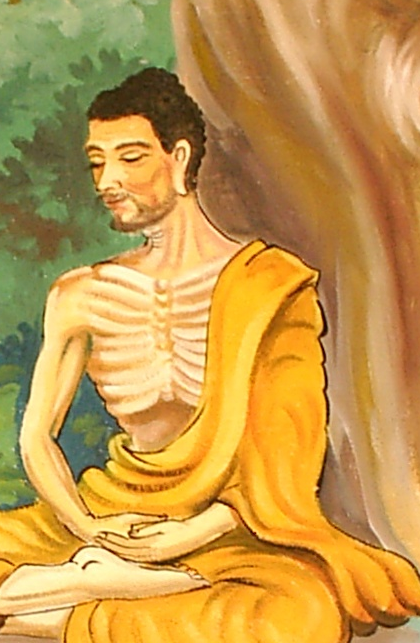
From C.S. Lewis to Frankenstein to Nathaniel Hawthorne’s Scarlet Letter, truth in religion and
spirituality has been a deep philosophical question in works as old as Dante’s Divine Comedy. Hermann Hesse’s cornerstone novel, Siddhartha, features a young Indian prince classically trained as a Brahman (a high Hindu priest). It follows his journey from asceticism to Enlightenment, his physical travels reflecting a spiritual exploration many young people undertake in their lives.
Siddhartha’s story is loosely based on the story of Siddhartha Gautama, the founder of the Buddhist religion. An Indian prince, raised as a Hindu, Siddhartha renounces his riches and becomes an ascetic. After finding no peace in the Samanas’ teachings, he goes under the tutelage of a wise man named Gotama, who was believed to be a Buddha (one who has achieved enlightenment). Yet unsatisfied, Siddhartha goes off on his own, searching for his own answers instead of following a predetermined path. However, the absence of companionship leaves him prey to worldly temptations. Siddhartha takes up with a beautiful escort, Kamala, and acquires many possessions, including a house, fine clothes, toys and servants. Living a life of luxury, he abandons his quest for Enlightenment. Siddhartha has a revelation about his lifestyle and deserts his materialistic life to live with a ferryman by the river. He finds out that Kamala birthed a son with him, and after her death, takes the boy under his arm. However, the young man is much like Siddhartha in his youth – stubborn and unwilling to learn from those much older and wiser than he is. As his life comes full circle, Siddhartha realizes that only knowledge can be passed on – wisdom comes with age. Achieving Enlightenment, Siddhartha can live out the rest of his life in peace.
Hermann Hesse and many other novelists throughout history have undertaken coming-of-age novels, in which the protagonist, through trials and tribulations, finds himself and the meaning of his life. Examine Catcher in the Rye. Feeling emotionally disconnected from other youths his age, young Holden Caulfield runs away to find out the path his life is meant to take. This story is considered a seminal novel in the development of the coming-of-age genre.
However, Siddhartha explores another side of the teenage angst novel. Siddhartha is not just lonely in the sense of physical loneliness. No, our protagonist suffers from spiritual solitude – he has questions and is isolated from the vast community of divine disciples. Spiritual loneliness is the deepest and most intense sequestration from common society possible. The most complex and permeating questions plague one constantly – and like Siddhartha, the religious outsiders in our society have no friend to find solace in.
While this is, in a way, similar to Mr. Caulfield’s dilemma, many people, as adolescents, experience the sensation of seclusion from others for differences in behavior, opinions or appearance. Many novel protagonists find comfort in others that walk off the beaten track, others who think as they do and can provide a guiding hand. Spiritual exile to the extent that Siddhartha experienced it is a bigger issue, and many people who experience such detachment can only find comfort when they have wrestled the doubts that beleaguer them.
Spiritual separation from society can be a feature of many coming-of-age novels. But finding oneself and overcoming one’s religious demons are two very different accomplishments. Mother Teresa once said the most terrible poverty is loneliness, and surely she would agree that spiritual loneliness the most unsettling loneliness of all.When Work Disappears: The World of the New Urban Poor, by William Julius Wilson
This book was recommended by one of my Splash ESP teachers, after a class on food deserts. Though the book is a bit outdated (published in 1996), Wilson takes a scholarly look at the world of the inner-city poor - the causes of poverty, the disproportionately African-American profile, and the circumstances maintaining the divide.
I liked Wilson's book very much - although it was full of facts and figures, it balances out with anecdotes, quotes, and is moderately easy to read (although it did take me a few months to finish). His main explanation for the cause of so much inner city poverty is racism - this may sound a bit racist to begin with, but I found that Wilson gave equal credit to both blacks and whites in his language and attitude. Basically, when integration of the big cities began, the white people (the ones with businesses, homes and jobs) moved out, leaving a jobless, economically downtrodden inner-city area, which the majority of relocating blacks moved into. Due to civil rights issues, it was incredibly difficult for black entrepreneurs to get loans to start businesses, further sinking the area into economic despair. As the area spirals downward, crime arises, and new businesses don't want to start there, fearing the safety of their investments and their families.
Now, while this makes plenty of sense, one big question posed by many people today is: Why is that still the case? These places are just as bad as, if not worse than, they were fifty years ago. Well, Wilson doesn't have a quick fix. He doesn't have a simple solution, which I like - like so many issues of our day, there is no quick fix, no easy solution. He doesn't blame it on racism, the moon cycles or the Republicans, or suggest throwing more money into the cities as a solution. Instead, he carefully explains the problems many black people face getting (and keeping) jobs, and also addresses issues of single parenthood, drugs and crime. It's hard to say where the cycle of poverty really begins, so I'll start with the example of a child.
A child in the inner city is extremely disadvantaged compared to a privileged, or even simply middle-class child in the suburbs. Black inner city children go to underfunded schools with low-quality teachers, who often don't believe in the child's success and don't bother to teach them well. When they come home, they are surrounded by their only role models - for the most part, single parents, drug dealers and other "participants in the informal economy", as Wilson calls them. If they are lucky enough to make it through high school and graduate, a significant accomplishment in such a difficult school environment, their prospects of going to college are limited.
Ignore the funds issue for a moment, as financial aid is available to most individuals, especially those with extreme need. A college or university is much less likely to take a student from Detroit with Bs and As than a student from Quincy, MA with Bs and Cs. Because of the low quality of education in the inner cities, those good grades aren't worth quite as much. Even putting THAT aside, take the standardized tests. Even assuming the student is prepared, their prospects are slim. For example, I'm scheduled to take my SATs in early 2012. I am prepared to purchase the study guide, take a prep course, and take the test 2-3 times in order to get my highest possible score. A disadvantaged high school sophomore or junior doesn't have that opportunity. They have one shot.
So our graduate has made it out of high school with a diploma and acceptable grades, but no college degree. He has no car, and bus transportation is both costly and unreliable, so he has to take a job in his immediate area. He doesn't have money to buy business clothes, so it will have to be something relatively unskilled, but also casual, like a manufacturing plant. But wait - the majority of our manufacturing has moved to China, and blue-collar jobs are nowhere to be found. Surrounded by drug dealers, who can make anywhere from $20-100 for a gram of cocaine on the street, you can see how prospects for a true career are instantly limited, and "informal economy ventures", like drugs and prostitution, are an attractive option - or a necessary one. If our graduate was supporting perhaps a mother and a younger sibling (a common occurrence), it would be much easier to submit to a career as a crack runner (and feed his family) than struggle to find a minimum wage job at a much higher real cost (clothes, transport, etc).
To take a different road, assume our graduate is lucky enough to find a job. He has a difficult time getting one, due to preconceived notions or negative employer experiences with inner-city employees. Because of the lack of job-holding role models in his like (a statistical probability), he is lacking in basic knowledge like dress code, employer-employee relations and job expectations. Statistically, even if he does obtain the job, he won't hold it for very long.
Wilson also addresses issues of teen pregnancy, related to the role model issue. A lot of these things are cyclical. Girls grow up without a father present (they probably also have many friends without fathers). Due to the virtually complete dissolution of a black inner-city family dynamic, they have no clue how to act in a relationship, and men have no clue how to treat their partners. Additionally, having a baby is something of a stamp of responsibility - in a way, it "proves" that you are mature and is a mark of womanhood. It also gives girls who may have been abused as children (statistically, girls who grow up in homes with "intermittent male role models" are many times more likely to be abused than their suburban counterparts) something to love, that loves them back. Teen pregnancy is also not as big of a deal in the inner-city. Whereas a teen pregnancy might scandalize a suburban neighborhood, inner-city girls really don't have much prospect for a future. Therefore, they aren't really "ruining their lives". Just like our high school graduate above, they don't have much hope for a real future.
He also talks briefly about welfare and welfare fraud. Wilson cites facts and figures about different welfare benefits in our country, comparing them to the minimum wage at the time, and over time, welfare benefits have gone up (in 1990 dollars). Now, it doesn't take a genius to figure out that economically, it makes more sense for a mother with a child to go on welfare and receive food stamps than work two minimum wage jobs without benefits.
Wilson does more than just address these issues - he suggests innovative public policy changes and programs that would help reduce welfare dependency, joblessness and single parenthood. For example, he cites a city in the U.S. (in Iowa?), which changed their public policy so working parents were still eligible for public assistance like welfare and food stamps. This led to a decrease in the number of people on welfare, because it closes the gap between wage earnings and welfare benefits.
I would absolutely recommend his book to anyone interested in studying public policy, nonprofit work, inner-city work or politics. It is a great, albeit heavy read, and I think it will really change the way you look at inner city politics today.
Overall: 10/10
Details:
Paperback: 352 pages
Publisher: Vintage (July 29, 1997)
ISBN-10: 0679724176
ISBN-13: 978-0679724179
I liked Wilson's book very much - although it was full of facts and figures, it balances out with anecdotes, quotes, and is moderately easy to read (although it did take me a few months to finish). His main explanation for the cause of so much inner city poverty is racism - this may sound a bit racist to begin with, but I found that Wilson gave equal credit to both blacks and whites in his language and attitude. Basically, when integration of the big cities began, the white people (the ones with businesses, homes and jobs) moved out, leaving a jobless, economically downtrodden inner-city area, which the majority of relocating blacks moved into. Due to civil rights issues, it was incredibly difficult for black entrepreneurs to get loans to start businesses, further sinking the area into economic despair. As the area spirals downward, crime arises, and new businesses don't want to start there, fearing the safety of their investments and their families.
Now, while this makes plenty of sense, one big question posed by many people today is: Why is that still the case? These places are just as bad as, if not worse than, they were fifty years ago. Well, Wilson doesn't have a quick fix. He doesn't have a simple solution, which I like - like so many issues of our day, there is no quick fix, no easy solution. He doesn't blame it on racism, the moon cycles or the Republicans, or suggest throwing more money into the cities as a solution. Instead, he carefully explains the problems many black people face getting (and keeping) jobs, and also addresses issues of single parenthood, drugs and crime. It's hard to say where the cycle of poverty really begins, so I'll start with the example of a child.
A child in the inner city is extremely disadvantaged compared to a privileged, or even simply middle-class child in the suburbs. Black inner city children go to underfunded schools with low-quality teachers, who often don't believe in the child's success and don't bother to teach them well. When they come home, they are surrounded by their only role models - for the most part, single parents, drug dealers and other "participants in the informal economy", as Wilson calls them. If they are lucky enough to make it through high school and graduate, a significant accomplishment in such a difficult school environment, their prospects of going to college are limited.
Ignore the funds issue for a moment, as financial aid is available to most individuals, especially those with extreme need. A college or university is much less likely to take a student from Detroit with Bs and As than a student from Quincy, MA with Bs and Cs. Because of the low quality of education in the inner cities, those good grades aren't worth quite as much. Even putting THAT aside, take the standardized tests. Even assuming the student is prepared, their prospects are slim. For example, I'm scheduled to take my SATs in early 2012. I am prepared to purchase the study guide, take a prep course, and take the test 2-3 times in order to get my highest possible score. A disadvantaged high school sophomore or junior doesn't have that opportunity. They have one shot.
So our graduate has made it out of high school with a diploma and acceptable grades, but no college degree. He has no car, and bus transportation is both costly and unreliable, so he has to take a job in his immediate area. He doesn't have money to buy business clothes, so it will have to be something relatively unskilled, but also casual, like a manufacturing plant. But wait - the majority of our manufacturing has moved to China, and blue-collar jobs are nowhere to be found. Surrounded by drug dealers, who can make anywhere from $20-100 for a gram of cocaine on the street, you can see how prospects for a true career are instantly limited, and "informal economy ventures", like drugs and prostitution, are an attractive option - or a necessary one. If our graduate was supporting perhaps a mother and a younger sibling (a common occurrence), it would be much easier to submit to a career as a crack runner (and feed his family) than struggle to find a minimum wage job at a much higher real cost (clothes, transport, etc).
To take a different road, assume our graduate is lucky enough to find a job. He has a difficult time getting one, due to preconceived notions or negative employer experiences with inner-city employees. Because of the lack of job-holding role models in his like (a statistical probability), he is lacking in basic knowledge like dress code, employer-employee relations and job expectations. Statistically, even if he does obtain the job, he won't hold it for very long.
Wilson also addresses issues of teen pregnancy, related to the role model issue. A lot of these things are cyclical. Girls grow up without a father present (they probably also have many friends without fathers). Due to the virtually complete dissolution of a black inner-city family dynamic, they have no clue how to act in a relationship, and men have no clue how to treat their partners. Additionally, having a baby is something of a stamp of responsibility - in a way, it "proves" that you are mature and is a mark of womanhood. It also gives girls who may have been abused as children (statistically, girls who grow up in homes with "intermittent male role models" are many times more likely to be abused than their suburban counterparts) something to love, that loves them back. Teen pregnancy is also not as big of a deal in the inner-city. Whereas a teen pregnancy might scandalize a suburban neighborhood, inner-city girls really don't have much prospect for a future. Therefore, they aren't really "ruining their lives". Just like our high school graduate above, they don't have much hope for a real future.
He also talks briefly about welfare and welfare fraud. Wilson cites facts and figures about different welfare benefits in our country, comparing them to the minimum wage at the time, and over time, welfare benefits have gone up (in 1990 dollars). Now, it doesn't take a genius to figure out that economically, it makes more sense for a mother with a child to go on welfare and receive food stamps than work two minimum wage jobs without benefits.
Wilson does more than just address these issues - he suggests innovative public policy changes and programs that would help reduce welfare dependency, joblessness and single parenthood. For example, he cites a city in the U.S. (in Iowa?), which changed their public policy so working parents were still eligible for public assistance like welfare and food stamps. This led to a decrease in the number of people on welfare, because it closes the gap between wage earnings and welfare benefits.
I would absolutely recommend his book to anyone interested in studying public policy, nonprofit work, inner-city work or politics. It is a great, albeit heavy read, and I think it will really change the way you look at inner city politics today.
Overall: 10/10
Details:
Paperback: 352 pages
Publisher: Vintage (July 29, 1997)
ISBN-10: 0679724176
ISBN-13: 978-0679724179
Sunday, January 2, 2011
Of Mice and Men, by John Steinbeck
John Steinbeck is one of America's most famous classic authors, persistent in his pessimism. I am not a personal fan of Steinbeck's - in my opinion, he is negative and discredits the persistence of the American spirit.
His classic novella, "Of Mice and Men" tells the story of a large, unusually strong and mentally challenged man and his friend George. While Steinbeck makes obvious use of foreshadowing (as any dime store novelist can), there is no literary technique that he appears to have any talent at, other than beating the reader to death with his message. Life beats the living crap out of you, and at the end it doesn't matter because you don't get what you want anyway.
Sound familiar? Steinbeck's other cornerstone novel, "The Grapes of Wrath" has basically the same theme. If I remember correctly, after losing almost everything in the Midwest, the protagonist family travels hundreds of miles, racking up countless expenses and losing family members, only to be less than wage slaves to an orange grower. Also, I'm pretty sure most of them are dead at the end.
Steinbeck would have an ironic, sad sort of feel to him (Heller, Vonnegut, etc.) if he didn't overly saturate every one of his novels with this pithy replacement for depth. I would also wonder perhaps what happened in Steinbeck's life to make him such a bitter and angry individual if he didn't insist on shoving his point of view down my throat in such poor excuses for literature.
His classic novella, "Of Mice and Men" tells the story of a large, unusually strong and mentally challenged man and his friend George. While Steinbeck makes obvious use of foreshadowing (as any dime store novelist can), there is no literary technique that he appears to have any talent at, other than beating the reader to death with his message. Life beats the living crap out of you, and at the end it doesn't matter because you don't get what you want anyway.
Sound familiar? Steinbeck's other cornerstone novel, "The Grapes of Wrath" has basically the same theme. If I remember correctly, after losing almost everything in the Midwest, the protagonist family travels hundreds of miles, racking up countless expenses and losing family members, only to be less than wage slaves to an orange grower. Also, I'm pretty sure most of them are dead at the end.
Steinbeck would have an ironic, sad sort of feel to him (Heller, Vonnegut, etc.) if he didn't overly saturate every one of his novels with this pithy replacement for depth. I would also wonder perhaps what happened in Steinbeck's life to make him such a bitter and angry individual if he didn't insist on shoving his point of view down my throat in such poor excuses for literature.
Monday, December 13, 2010
Deep Economy: The Wealth of Communities and the Durable Future, by Bill McKibben
Bill McKibben’s "economics of environmentalism" book fully covered the community crisis surrounding our world today. From the economics of happiness to environmental stability, his text flowed smoothly from eating local to lack of community aid in our country to our durable future. He gets straight to the heart of many of these issues, down to the fundamental attitudes that effect our decision making. While McKibben addresses so many of the problems we have in our society quite well, there are holes in his logic.
When it comes to eating locally, he spent a year eating only foods that grew within an hour or two of his home. While that was a great decision, McKibben lives in Vermont – probably one of the densest farm states in the nation. In fact, I think they do have the most farms per square mile of any state in the country. Most of America doesn’t have a fully sustainable (meat, cheese, dairy, egg, fruit and vegetable) CSA farm within an hour of their home, like McKibben does. This doesn’t give us an excuse to eat pineapples in January, but one should realize that eating completely local might not be a realistic goal for most of the country. While I have a fabulous farmer’s market minutes from my home, they do not sell meat, cheese or dairy, so if I ate those and wanted them locally, I’d have to go all the way to Foster to get them, if I could even get them there. McKibben also completely ignores the plight of inner-city communities where fresh food is totally unavailable in any form – he doesn’t even acknowledge that living completely locally simply isn’t realistic for a lot of people. That being said, McKibben has a lot of great ideas that, in my opinion, are fairly realistic solutions to our problems.
McKibben also has a distinct bias. I got some pretty Socialist leanings based on his political commentary. He seems to support forcibly driving out “bad” industries or technologies using laws and regulations. It’s still a good book, but take his opinions with a grain of salt. A lot of issues (taxes, national health care, Social Security) are a lot more complex than simply giving all for the good of the community. (Although, to his credit, when covering politicians’ roles in these issues, he seemed to give fair play to both George Bush and Bill Clinton).
He strikes a good balance when it comes to statistics. He isn’t heavy on them but he provides data along with the anecdotes. However, I don’t trust some of them outright. For example, McKibben stated that as more Wal-Marts arrived in a specific community, those communities grew poorer. That may not be totally accurate – the appearance of the Wal-Marts (to me) signifies a demand for cheap goods, implying an inherent community poverty that would motivate Wal-Mart to open multiple stores within a fairly small area. He also cites a statistic in which “security” outranked any form of “being able to help your children” as a benefit of money – where in my mind, money provides security, partially in the ability to help your children.
While McKibben’s points are good, he has a difficult time pulling what we call in literature a “red thread” – a topic or overarching theme that ties all your evidence or reasoning together. While the book was an enjoyable read, I found myself forgetting his overall message – that we, as a society, need to ease back on economic efficiency so intense that it sacrifices community, family time and our happiness. That we must make our economy less traditionally efficient in order to increase the wealth of our communities, happiness of our citizens and increase both our independence and codependence. And that above all, we need to focus more on improving the quality of life for all human beings, including ourselves, rather than the quantity in our bank accounts.
Overall: 7 out of 10.
Details:
Paperback: 272 pages
Publisher: St. Martin's Griffin; Later printing edition (March 4, 2008)
Language: English
ISBN-10: 0805087222
ISBN-13: 978-0805087222
Friday, November 12, 2010
Slaughterhouse-Five, by Kurt Vonnegut
Forgive, this is a copy/paste of my literary analysis for class. I found it suitable.
You’re born, you live, you die; so what? That’s Kurt Vonnegut’s view on life – at least, as far as anyone reading his 1969 groundbreaker, Slaughterhouse-Five can tell. Told by an omniscient narrator, Slaughterhouse-Five is a true-to-life story about the bombing of Dresden during WWII. Vonnegut’s tone is evident throughout the novel, and many believe the narrator is Vonnegut himself.
Slaughterhouse-Five takes place during WWII, following Billy Pilgrim, a rather flat and distant character as he enters the war and is taken prisoner by enemy forces. As Pilgrim experiences stressful and dangerous situations, he “time travels” to his future and distant planets. Events culminate in the Dresden bombing at the end of the book, and we see Pilgrim towards the end of his life, his madness fully developed at this point. Pilgrim is the only major character in this story. While others are fleshed out, they are mainly stock characters that lack development through the story. Even Pilgrim himself does not grow in any way, a great example of Vonnegut’s irony.
Kurt Vonnegut has a very distinctive tone. His point of view could in fact be best described as “You’re born, you live, you die; so what?” – an expression that fits in very distinctively with his atheism. After every mention of death, dying and destruction, he uses the phrase “so it goes” – as if the death of a character is only as tragic as a bottle of flat champagne. “Major” characters die in ignoble and unexpected ways, representing the eventuality and irony of death – unlike most war novels, in which major characters often die heroically. Sometimes ironic, sometimes satirical and sometimes just sad, Vonnegut’s style evokes a fatalistic version of Joseph Heller’s Catch-22. Vonnegut experienced a lot of suffering in his life – from his mother’s suicide while he was away during WWII to the schizophrenia and war trauma that plagued him all his life, he was a broken individual. Many modern scholars claim that Vonnegut had post-traumatic stress disorder, another explanation for his use of Billy Pilgrim as a distant projection of himself.
One may question the book’s success as an anti-war novel. Published in 1969, during the height of Vietnam and pacifistic protests, Vonnegut’s novel was explosive almost immediately. Except for the first chapter (told from Vonnegut’s point of view), and the inclusion of a book excerpt lamenting the bombing, Vonnegut never explicitly expresses any anti-war sentiments. Slaughterhouse-Five has enjoyed its success for that very reason. Many scholars have suggested that Billy Pilgrim is, in fact, Kurt Vonnegut – that Pilgrim himself is not a character, but instead is a version of Vonnegut, used so he wouldn’t have to deal with the trauma he suffered during the war. Both show clear symptoms of schizophrenia and post-traumatic stress disorder – Pilgrim’s “time travels” are just hallucinations, brought on by stress and anxiety, and Vonnegut was known to suffer from schizophrenia. Many things he encounters in reality show up later in his delusions (such as the dirty picture of the woman and horse).
This novel can definitely be considered quasi-autobiographical – Pilgrim is only aware of his own thoughts and feelings (of which there are few – a distant relationship between events and emotions is another characteristic of schizophrenics and trauma victims). He not only exhibits the qualities of the same mental illness Vonnegut himself had, but also shares experiences with Vonnegut – after being taken prisoners of war during WWII, both were held captive in a converted slaughterhouse called Slaughterhouse-Five. With Vietnam (and its protestors) raging and the discovery of PTSD, it’s no wonder Slaughterhouse-Five fueled the anger surrounding the war and the mental health of veterans.
Slaughterhouse-Five was a roaring success, and continues to enjoy fame as a modern classic. Depicting horrifying wartime events with his trademark black humor, satire and irony, Vonnegut’s 1969 novel is masterfully subtle, speaking louder than any anti-war diatribe ever did.
Friday, October 22, 2010
Cradle to Cradle: Remaking the Way We Make Things, by William McDonough and Michael Braungart
Sorry it's been so long since I posted - I've been busy and this book took 2-3 weeks to come into the library. I'm making my way through my reading list, which contains a lot of nonfiction (Kolbert's climate change novel was also on that list). In a similar thread, Cradle to Cradle is basically about environmentalism, but it absolutely shattered every notion I'd had about being good to the environment. McDonough and Braungart start off talking about the effects the many different products we use on a daily basis have on us. They don't bog down with statistics, chemical or biological terms, but run quickly through some of the hazards of modern chemical living.
One concept I found very interesting was their view on recycling. Braungart, a chemist, explains that to break down soda bottles into rugs or coats, or even more soda bottles, not only are you doing more damage to the environment with chemical processes, risking your own health as these chemicals off-gas into your home and using much more energy than just creating a new bottle, you're "downcycling" the material. An analogy I would like to make is to recycled paper. Compare it to a new piece of virgin paper - recycled paper is grainy, brown, thin and aesthetically very unappealing. This is because turning that used piece of paper into "new" paper, actually downgrades the quality of the material - the same with almost everything we recycle in modern life. They say our products should be designed to be recycled indefinitely, with no effect on quality (which is possible). Braungart and McDonough blow the cover off modern environmentalism, basically stating that we need to redesign the way we live. Being "less bad" by buying recycled paper, "all natural" sheets and using the bus isn't good enough. They want American innovators to design products that are made to be good. Focusing less on what we're taking out of the environment, but how to give back to it. Basically, a version I suppose of their ideal product would be something made of nonharmful, effective and limited "ingredients" that benefits whatever it is meant to be used on, then goes back into the earth and further benefits the ecosystem that lives there. Their design proposition for products basically is this: Think outside the box. Don't work on improving the car - redesign our transportation system so that it eliminates the need for cars entirely.
I would also describe them as "locavores" in that they believe products should be made for individuals, not in a "one size fits all" mentality. They say that laundry soap flakes are made for the hardest job they might have to do, which means they can do anything, but it also means they are too strong for the job they usually have to do. Many people in less developed countries apply these soaps with their hands, in rivers used for bathing and washing. In this situation, these women need gentler soap that will work with the environment they are being used in. They want to design products made to be used in particular situations, suited totally to the needs of one system or group, and that are enjoyable to use. Respect diversity, don't eliminate it.
Another concept they introduce in the book is improving modern manufacturing. They describe the work they did with a Ford factory implementing eco-effective strategies to manage problems from worker happiness to rainwater management. With Braungart and McDonough (and a team of biologists, chemists and toxicologists), Ford cleaned up the dead and polluted soil around the factory using native plants and microrganisms, installed an underground water collection system that would filter water out to local waterways in a safe way. They also installed tons of skylights and windows in their building and implemented new heating and cooling strategies - making the workers much happier and more productive, aesthetically improving their building, and saving thousands on energy costs.
The book was exceptionally well-written, well-organized and easy to read. Their language flowed beautifully and kept the reader interested and in the loop - you won't find dry statistics, charts and technical jargon here. That being said, you must have an interest in environmentalism - it will be boring without one. I would absolutely recommend this book to anyone as an essential read - but get it from the library. Although it is made of a durable, waterproof, indefinitely-recyclable and chemically safe synthetic, this technology is new and very expensive.
Overall: 10 out of 10.
Details:
Paperback: 208 pages
Publisher: North Point Press; 1st edition (April 22, 2002)
Language: English
ISBN-10: 0865475873
ISBN-13: 978-0865475878
One concept I found very interesting was their view on recycling. Braungart, a chemist, explains that to break down soda bottles into rugs or coats, or even more soda bottles, not only are you doing more damage to the environment with chemical processes, risking your own health as these chemicals off-gas into your home and using much more energy than just creating a new bottle, you're "downcycling" the material. An analogy I would like to make is to recycled paper. Compare it to a new piece of virgin paper - recycled paper is grainy, brown, thin and aesthetically very unappealing. This is because turning that used piece of paper into "new" paper, actually downgrades the quality of the material - the same with almost everything we recycle in modern life. They say our products should be designed to be recycled indefinitely, with no effect on quality (which is possible). Braungart and McDonough blow the cover off modern environmentalism, basically stating that we need to redesign the way we live. Being "less bad" by buying recycled paper, "all natural" sheets and using the bus isn't good enough. They want American innovators to design products that are made to be good. Focusing less on what we're taking out of the environment, but how to give back to it. Basically, a version I suppose of their ideal product would be something made of nonharmful, effective and limited "ingredients" that benefits whatever it is meant to be used on, then goes back into the earth and further benefits the ecosystem that lives there. Their design proposition for products basically is this: Think outside the box. Don't work on improving the car - redesign our transportation system so that it eliminates the need for cars entirely.
I would also describe them as "locavores" in that they believe products should be made for individuals, not in a "one size fits all" mentality. They say that laundry soap flakes are made for the hardest job they might have to do, which means they can do anything, but it also means they are too strong for the job they usually have to do. Many people in less developed countries apply these soaps with their hands, in rivers used for bathing and washing. In this situation, these women need gentler soap that will work with the environment they are being used in. They want to design products made to be used in particular situations, suited totally to the needs of one system or group, and that are enjoyable to use. Respect diversity, don't eliminate it.
Another concept they introduce in the book is improving modern manufacturing. They describe the work they did with a Ford factory implementing eco-effective strategies to manage problems from worker happiness to rainwater management. With Braungart and McDonough (and a team of biologists, chemists and toxicologists), Ford cleaned up the dead and polluted soil around the factory using native plants and microrganisms, installed an underground water collection system that would filter water out to local waterways in a safe way. They also installed tons of skylights and windows in their building and implemented new heating and cooling strategies - making the workers much happier and more productive, aesthetically improving their building, and saving thousands on energy costs.
The book was exceptionally well-written, well-organized and easy to read. Their language flowed beautifully and kept the reader interested and in the loop - you won't find dry statistics, charts and technical jargon here. That being said, you must have an interest in environmentalism - it will be boring without one. I would absolutely recommend this book to anyone as an essential read - but get it from the library. Although it is made of a durable, waterproof, indefinitely-recyclable and chemically safe synthetic, this technology is new and very expensive.
Overall: 10 out of 10.
Details:
Paperback: 208 pages
Publisher: North Point Press; 1st edition (April 22, 2002)
Language: English
ISBN-10: 0865475873
ISBN-13: 978-0865475878
Saturday, September 11, 2010
Colleges That Change Lives, by Loren Pope
This is a book I heard about after meeting a professor from Clark (he mentioned that Clark University was included in Pope's list of influential colleges). I bought two copies off Amazon (one for myself and one for my boyfriend), and while I do have some new colleges on my list to tour and consider, I found myself rather underwhelmed.
Pope and I at least agree on something - the racket about the Ivy Leagues. These schools are ridiculously overpriced (unfortunately, setting the standard for tuition rates), and often don't have the quality of education everyone thinks they do. Most often, you are taught by grad students (TAs to professors). Ivy Leagues have great appeal for professors - the promise of research resources without having to teach as much as other schools. Pope endeavored to create a list of the best colleges across the country, based on student satisfaction and graduate paths.
Pope's school listings were wide and varied, but one common theme I found was an abundance of statements like this: "We'd rather have the 2.0 or 3.0 student with mediocre SAT scores and a great character, goals, love of learning and experiences than a straight-A, 4.0 student." Which, to be honest, I would too, were I the dean of admissions at a college. However, I felt myself asking throughout the book, "I AM the straight-A, 4.0 student, who also has great goals and loves learning. What do you have to offer me?" The silence was deafening. This isn't to say these schools have nothing to offer for a student like myself, but they didn't mention too much about it.
My only other complaint about some of these schools is that a great percentage of them are religious schools. Which is fine if you're Methodist or Presbyterian, but I would prefer a nonreligious school. One school I found (Wheaton College) was Christian, but nondenominational (on my list). But for the most part, all religious schools were Methodist, Presbyterian, Catholic or evangelical fundamentalist. All in all, I give Pope's collection of schools a mediocre rating. It definitely changed the way I thought about college, but didn't go anywhere with that change in thinking. This is definitely a book to take out from the library, but probably not worth the investment to own.
Overall: 4 out of 10.
Details:
Paperback: 320 pages
Publisher: Penguin (Non-Classics); Revised edition (July 25, 2006)
Language: English
ISBN-10: 0143037366
ISBN-13: 978-0143037361
Pope and I at least agree on something - the racket about the Ivy Leagues. These schools are ridiculously overpriced (unfortunately, setting the standard for tuition rates), and often don't have the quality of education everyone thinks they do. Most often, you are taught by grad students (TAs to professors). Ivy Leagues have great appeal for professors - the promise of research resources without having to teach as much as other schools. Pope endeavored to create a list of the best colleges across the country, based on student satisfaction and graduate paths.
Pope's school listings were wide and varied, but one common theme I found was an abundance of statements like this: "We'd rather have the 2.0 or 3.0 student with mediocre SAT scores and a great character, goals, love of learning and experiences than a straight-A, 4.0 student." Which, to be honest, I would too, were I the dean of admissions at a college. However, I felt myself asking throughout the book, "I AM the straight-A, 4.0 student, who also has great goals and loves learning. What do you have to offer me?" The silence was deafening. This isn't to say these schools have nothing to offer for a student like myself, but they didn't mention too much about it.
My only other complaint about some of these schools is that a great percentage of them are religious schools. Which is fine if you're Methodist or Presbyterian, but I would prefer a nonreligious school. One school I found (Wheaton College) was Christian, but nondenominational (on my list). But for the most part, all religious schools were Methodist, Presbyterian, Catholic or evangelical fundamentalist. All in all, I give Pope's collection of schools a mediocre rating. It definitely changed the way I thought about college, but didn't go anywhere with that change in thinking. This is definitely a book to take out from the library, but probably not worth the investment to own.
Overall: 4 out of 10.
Details:
Paperback: 320 pages
Publisher: Penguin (Non-Classics); Revised edition (July 25, 2006)
Language: English
ISBN-10: 0143037366
ISBN-13: 978-0143037361
Friday, September 10, 2010
Field Notes from a Catastrophe: Man, Nature and Climate Change, by Elizabeth Kolbert
Elizabeth Kolbert's nonfiction book, Field Notes from a Catastrophe provides an honest, factual and comprehensive look at climate change in today's world. From Alaskan villages to South American jungles, Kolbert details the devastating effects of pollution on today's world - in places where it's already happening. While the book is quite dry for anyone not interested in climate change, it is a crucial and encompassing work that will leave any reader better informed. Kolbert cites a lot of facts and figures in her book, but don't be alarmed if they aren't true - it is five or six years old, so I wouldn't take any of her numbers as fact before checking them yourself. Kolbert interviews many experts on the subject of climate change. She is also very factual when addressing the causes and solutions to many problems, but doesn't shy away from politics either. While many would say that climate change is a "leftist" issue, purported only by fear-mongering Democrats (and yes, Kolbert was a writer for the New York Times), she gives fair recognition to politicians of all stripes. She expresses disappointment at the Bush administration's handle on climate issues, but also praises Senator John McCain for supporting and introducing strong climate legislation in the Senate. She also addresses the arguments of global warming disbelievers, and explains the faults in a respectful but comprehensive way. Among all Kolbert's warnings of future devastation, hope is present. She spends an entire chapter detailing the efforts of Burlington, Vermont to make their town more eco-friendly. This rather large town has worked hard to reduce their carbon emissions by over 175,000 tons in 16 years. Their electricity use has dropped by 1%, while the rest of Vermont has risen by 15% (so a total 16% savings). Her book provides a clear, focused and wide-sweeping look at the effects of climate change (from melting ice sheets to extinct Costa Rican toads), to our future losses, to solutions to the problems facing the next generation. While not quite as passionate as other climate-related books, Field Notes from a Catastrophe is a hard look at our energy future, and the changes that need to be made for our planet, our children and future.
Wednesday, August 11, 2010
Happy birthday!
Happy late birthday to your favorite (or at least my favorite....) literary blog! We turned 1 in July, but I missed it, so here's a belated birthday message! To another great year. :)
Tuesday, August 10, 2010
The Resurrection Casket, by Justin Richards
The Resurrection Casket is a Dr. Who novel that my dad passed on to me. I have my reservations about these "fanfictions that knew someone", and this book was definitely not the one to try and prove me wrong. The premise started out interesting enough - a futuristic UK that has developed through time without using electricity and modern technology because of a mysterious interference field surrounding this area (aptly named Starfall). Steam-operated robots and spaceships, the whole nine yards. Sort of a steampunk geek's futuristic dreamworld. Starfall was once terrorized by a space pirate named Hamlek Glint and his crew of merciless pirate robots. Pirates, robots, time travel, planets, treasure and spaceships? Yeah. If a 12-year-old nerd could have thrown up any more all over this book, please, let me know how in the comments. Honestly, this book started out tolerable - the Doctor and Rose get stuck in Starfall because of the "zeg" (mysterious technology-slaughtering interference field), and have to find a way to get out. After hearing tales at the local pub (of course) about Hamlek Glint's lost treasure, several men are mysteriously murdered after selling fake artifacts to local collectors. The Doctor and Rose meet a few interesting yet stereotypical characters in their search for the killer:
Jimm: The precocious, mysterious ten-year-old who likes to hang around the pub with his half-robot friend Silver Sally.
Silver Sally: A half-robot barkeep.
Bobb: Jimm's protective yet aging uncle with a strong interest and expertise in Glint's treasure.
Drel McCavity: A local wealthy man with a strong interest in Glint's treasure but no expertise. Is a tad off his rocker after his wife, Larissa, left him for someone else.
So long story short, leaving the murders wide open, the Doctor and Rose commission a ship with Sally, Bobb, McCavity, and some of Sally's robot friends to hunt down Glint's ship and treasure (including the famed Resurrection Casket - if you can't figure that one out on your own I'm not explaining it). The Doctor and Rose intend to get out of the zeg so they can get the TARDIS working again. Before leaving, the Doctor meets the commissioned killer of the con artists, who tries to kill the Doctor, but is extremely apologetic. This "monster" is by far the most ridiculous creature I have ever heard of. He is an multidimensional hitman who hates his job and is being tagged into killing several Starfall residents. His mysteriously unknown master has "Kevin" at his beck and call. He often defies "monster" stereotypes by talking about his "hobbies", like sudoku and crossword puzzles. I can't make this stuff up.
After hiding in a cupboard aboard the steam spaceship, Rose finds out *gasp* that Sally and her pals are former Glint pirates, and that they have smuggled Jimm aboard. After a dumb mistake that alerts Sally to her eavesdropping, the pirates come after the crew, chasing them all around the ship in a game of cat and mouse. They find the casket, and (another SURPRISE), McCavity's wife Larissa is the one left in it, not Glint. She's dead of course (McCavity killed her) because according to the Doctor, the "Resurrection Casket" evidently doesn't resurrect you at all. FAIL. Leaving it totally open-ended as to how she got into the casket, Richards continues with his story. Eventually it is revealed that the casket uses living tissue to turn its contents back into a baby. So Glint was released from his casket as a baby by his mate Robbie. Robbie is Bobb and Jimm is baby Glint (clearly explaining his precocious intellect and ability to comprehend completely adult concepts like philosophy and relationships). More surprising explanations and eventually hugs are exchanged and the Doctor and Rose sail off into the sunset in the TARDIS.
Richards clearly has no grasp on humor, plots or good story-telling period. The dialogue was stilted and the humor was forced, cheesy and terrible. Plot holes were completely left wide open and the story itself was shaky to begin with. I love the steampunk universe concept and think Richards could have run with it in so many different directions, but honestly I don't think he could have intentionally written it worse.
Overall: 2 out of 10.
Details:
Hardcover: 256 pages
Publisher: Random House UK; hardcover edition (June 13, 2006)
Language: English
ISBN-10: 0563486422
ISBN-13: 978-0563486428
Jimm: The precocious, mysterious ten-year-old who likes to hang around the pub with his half-robot friend Silver Sally.
Silver Sally: A half-robot barkeep.
Bobb: Jimm's protective yet aging uncle with a strong interest and expertise in Glint's treasure.
Drel McCavity: A local wealthy man with a strong interest in Glint's treasure but no expertise. Is a tad off his rocker after his wife, Larissa, left him for someone else.
So long story short, leaving the murders wide open, the Doctor and Rose commission a ship with Sally, Bobb, McCavity, and some of Sally's robot friends to hunt down Glint's ship and treasure (including the famed Resurrection Casket - if you can't figure that one out on your own I'm not explaining it). The Doctor and Rose intend to get out of the zeg so they can get the TARDIS working again. Before leaving, the Doctor meets the commissioned killer of the con artists, who tries to kill the Doctor, but is extremely apologetic. This "monster" is by far the most ridiculous creature I have ever heard of. He is an multidimensional hitman who hates his job and is being tagged into killing several Starfall residents. His mysteriously unknown master has "Kevin" at his beck and call. He often defies "monster" stereotypes by talking about his "hobbies", like sudoku and crossword puzzles. I can't make this stuff up.
After hiding in a cupboard aboard the steam spaceship, Rose finds out *gasp* that Sally and her pals are former Glint pirates, and that they have smuggled Jimm aboard. After a dumb mistake that alerts Sally to her eavesdropping, the pirates come after the crew, chasing them all around the ship in a game of cat and mouse. They find the casket, and (another SURPRISE), McCavity's wife Larissa is the one left in it, not Glint. She's dead of course (McCavity killed her) because according to the Doctor, the "Resurrection Casket" evidently doesn't resurrect you at all. FAIL. Leaving it totally open-ended as to how she got into the casket, Richards continues with his story. Eventually it is revealed that the casket uses living tissue to turn its contents back into a baby. So Glint was released from his casket as a baby by his mate Robbie. Robbie is Bobb and Jimm is baby Glint (clearly explaining his precocious intellect and ability to comprehend completely adult concepts like philosophy and relationships). More surprising explanations and eventually hugs are exchanged and the Doctor and Rose sail off into the sunset in the TARDIS.
Richards clearly has no grasp on humor, plots or good story-telling period. The dialogue was stilted and the humor was forced, cheesy and terrible. Plot holes were completely left wide open and the story itself was shaky to begin with. I love the steampunk universe concept and think Richards could have run with it in so many different directions, but honestly I don't think he could have intentionally written it worse.
Overall: 2 out of 10.
Details:
Hardcover: 256 pages
Publisher: Random House UK; hardcover edition (June 13, 2006)
Language: English
ISBN-10: 0563486422
ISBN-13: 978-0563486428
Thursday, July 29, 2010
Born on a Blue Day, by Daniel Tammet
Born on a Blue Day is the extraordinary true story of a young man who experiences many setbacks in life - besides having Asperger's syndrome, as a young child Daniel suffered from epilepsy. Some scientists have suggested his seizures caused his savant syndrome (think Rain Man), a condition linked to his synethesia (a condition in which numbers, letters and words are perceived as shapes, emotions and colors). Tammet relied heavily on his parents growing up. He was sensitive to loud noises, certain textures, and had a difficult time learning. They helped him in whatever way they could to make his life more comfortable. He had a difficult time brushing his teeth, hating the sound and sensation. As a teenager and adult, shaving was incredibly difficult. Daniel socialized mainly with his many brothers and sisters. They aided in his care, and he learned how to work in groups, compromise, and problem-solve. However, he still could not make friends at school. He sat by himself at recess time, and played with his imaginary friend, an older woman named Anne. When he did make friends, he lost them quickly with annoying behaviors, such as standing very close to them, not making conversation or even feigning interest in their hobbies. He was different from the other children in many ways, and knew their experience of life was vastly different from his own. Interestingly, he suggests this helped him as a young adolescent, discovering he was gay. It did not bother him as much as other children - he already knew he was different, and had come to terms with it. After graduating high school, Daniel really didn't know what he wanted to do with his life. Instead of going to college, he travelled abroad to Lithuania as a volunteer English teacher. There, he discovered his speed language-learning abilities, and got in touch with other gay couples to learn more about himself as a person. Upon returning to the U.S., Daniel met his current partner online, which taught him more about himself and depending upon another person. After meeting and eventually moving in with Neil, he had a difficult time finding a job - something apparently not unique among individuals with autism. Using Neil's skills as a software developer, Daniel developed a language-learning software online. Today, he still operates the software, but has written several books and been involved with the production of a documentary. He describes how he learns and views language, and includes information on different studies and scientific discoveries regarding how people learn language. He also talks about his own language, the one he invented. Daniel describes the process he went through learning the digits of pi - to raise money for the Epilepsy Foundation, he learned and recited over 22,500 numbers. After this amazing feat, a documentary crew contacted him, looking to make a documentary (Brainman) about savant syndrome. Daniel travelled all over the world, met scientists and researchers, and Kim Peek - the inspiration for Dustin Hoffman's character Rain Man. This led to his book and an appearance on the Late Show with David Letterman. He also describes briefly his journey to Christianity, before ending the autobiography with, "Everyone is said to have a perfect moment once in a while.... I imagine these moments as fragments or splinters scattered across a lifetime. If a person could somehow collect them all up and stick them together he would have a perfect hour or even a perfect day....he would be closer to the mystery of what it is to be human. It would be like having a glimpse of heaven."
Tammet's memoir is profound, touching, moving and thought-provoking. It provides a glimpse into one of today's most extraordinary minds and a unique perspective on a life most of us take for granted.
Details and resources:
http://www.optimnem.co.uk/
Paperback: 256 pages
Publisher: Free Press (October 16, 2007)
Language: English
ISBN-10: 1416549013
ISBN-13: 978-1416549017
Tammet's memoir is profound, touching, moving and thought-provoking. It provides a glimpse into one of today's most extraordinary minds and a unique perspective on a life most of us take for granted.
Details and resources:
http://www.optimnem.co.uk/
Paperback: 256 pages
Publisher: Free Press (October 16, 2007)
Language: English
ISBN-10: 1416549013
ISBN-13: 978-1416549017
Tuesday, June 29, 2010
Girls Gone Mild: Young Women Reclaim Their Self-Respect and Find it's Not Bad to be Good, by Wendy Shalit
I received this book recently in the mail, but it took me a while to finish it. Basically the premise of Wendy Shalit's book is new feminism. She believes that a new generation of girls are reclaiming the self-respect that has gradually been lost since women's sexual liberation was first introduced. While Shalit never denounces female sexual liberation, she points out that basically now, we have reverted back to what original feminism fought to change - the image of women as sex objects. However, she argues, the solution to men sexualizing women is not to sexualize yourself. Instead, it is to respect yourself, dress modestly, and behave modestly. I was somewhat surprised, however, to realize Shalit was not advocating going back to the buttoned-up cardigans and docile housewives of the 1950s. From everything she said, she was in full support of women's complete liberation. However, today's sexy bad girl is less of a feminist than her predecessors - by dressing sexy and offering sexual favors, girls are really only pleasing men. Statistics show that many of these girls are not being fulfilled themselves. The real road to sexual liberation and control, Wendy Shalit says, is to attract the right kind of guy. Basically the tried and true motto: If you dress like trash, what do you think you'll attract? By dressing modestly and respecting yourself, Shalit thinks most guys will focus more on what's coming out of your mouth than what's spilling out of your clothes.
I don't agree with Shalit on everything. She thinks there is a very large modesty movement afoot in the United States, which I think is not the case. She supplies great examples of average teenagers making good choices and standing up for themselves (like Ella Gunderson, the eleven-year-old girl who sent a letter to Nordstrom, asking for more modest clothing, and the Girlcotters that started a nationwide boycott of Abercrombie and Fitch, after the well-known retailer printed T-shirts with messages like, "Who needs brains when you have these?"). However, the vast majority of the teenage population does not subscribe to modesty theory, and as a teenager I don't really feel any less put-upon by society to be sexy and sleep around. She also thinks abstinence-only education is the only "responsible" education choice, with which I disagree. Morals start at home - honestly, I don't think most teenagers pay much attention to their sex education classes, except for the information they want to know. I think abstinence education would fall on deaf ears, and leave us with a less-educated teen populace than we have now. A populace that would still be going out and having sex - but less safely. Morality education starts at home, with good family role models that have open and frank discussions with their children. Ignorance is not the same as morality.
Overall, Shalit's book was alright. Sometimes it felt like it was preaching to the choir, sometimes it dragged and sometimes it just didn't make sense.
Overall: 5 out of 10.
Details:
Hardcover
Publisher: RANDOM HOUSE (2007)
ASIN: B00136USH0
I don't agree with Shalit on everything. She thinks there is a very large modesty movement afoot in the United States, which I think is not the case. She supplies great examples of average teenagers making good choices and standing up for themselves (like Ella Gunderson, the eleven-year-old girl who sent a letter to Nordstrom, asking for more modest clothing, and the Girlcotters that started a nationwide boycott of Abercrombie and Fitch, after the well-known retailer printed T-shirts with messages like, "Who needs brains when you have these?"). However, the vast majority of the teenage population does not subscribe to modesty theory, and as a teenager I don't really feel any less put-upon by society to be sexy and sleep around. She also thinks abstinence-only education is the only "responsible" education choice, with which I disagree. Morals start at home - honestly, I don't think most teenagers pay much attention to their sex education classes, except for the information they want to know. I think abstinence education would fall on deaf ears, and leave us with a less-educated teen populace than we have now. A populace that would still be going out and having sex - but less safely. Morality education starts at home, with good family role models that have open and frank discussions with their children. Ignorance is not the same as morality.
Overall, Shalit's book was alright. Sometimes it felt like it was preaching to the choir, sometimes it dragged and sometimes it just didn't make sense.
Overall: 5 out of 10.
Details:
Hardcover
Publisher: RANDOM HOUSE (2007)
ASIN: B00136USH0
Subscribe to:
Posts (Atom)